Every week, I get a question from a patron on when the next series (season) of a British TV show is coming out. This week, I thought I would provide some updates.
Have you done the Broadchurch/Gracepoint marathon yet? It was interesting to see the differences from the British to the American versions.
I have just finished watching the second series of Broadchurch. What a trial! Broadchurch will be filming its third and final series this summer. David Tennant and Olivia Colman will be coming back as the detectives. The vicar, the Latimers and the newspaper editor have been signed. Some new faces will be coming on board. Julie Hesmondhalgh (Hayley from Coronation Street) will be joining in a significant role. This series will focus on a new crime that has devastating consequences for the town. It will air in the UK in early 2017.
On the weekend, I was riveted by series 2 of The Fall. Jamie Dornan is supremely creepy as Paul Spector. Filming has been completed on final series 3. The last 5 episodes will be shown in the UK late this year and possible on Netflix a couple of months after that.
The fourth and final season of Mr. Selfridge is currently being shown on PBS. Katherine Kelly (Becky from Coronation Street) will have more airtime this series.
Have you watched 'the Paradise', the poor man's version of Mr. Selfridge. the BBC axed it in 2014 after two series because it couldn't compete with Mr. Selfridge. If you haven't had a chance, check it out.
From time to time, I will update you on your favourite Brit television shows. All series mentioned here are available from the Lincoln Public Library.
I'll be watching!
Tuesday, 26 April 2016

Tuesday, 19 April 2016
National Canadian Film Day
In honour of National Canadian Film Day, here is the top ten Canadian films as decided in 2015.
2015 list
| Rank | Title | Year | Director |
|---|---|---|---|
| 1 | Atanarjuat: The Fast Runner | 2001 | Zacharias Kunuk |
| 2 | Mon Oncle Antoine | 1971 | Claude Jutra |
| 3 | The Sweet Hereafter | 1997 | Atom Egoyan |
| 4 | Léolo | 1992 | Jean-Claude Lauzon |
| 5 | Jésus de Montréal | 1989 | Denys Arcand |
| 6 | Goin' Down the Road | 1970 | Don Shebib |
| 7 | Dead Ringers | 1988 | David Cronenberg |
| 8 | C.R.A.Z.Y. | 2005 | Jean-Marc Vallée |
| 9 | My Winnipeg | 2007 | Guy Maddin |
| 10 | Stories We Tell | 2012 | Sarah Polley |
| 10 | Les Ordres | 1974 | Michel Brault |
Thursday, 14 April 2016
Deconstructing Downton Abbey
Historian Margaret MacMillan on the global TV sensation

The cast and iconic manor house of Downton Abbey are recognizable to viewers around the world (photo courtesy of WGBH (C) Carnival Film & Television Limited 2012 for MASTERPIECE)
Writer Jenny Hall spoke to historian Margaret MacMillan about the allure of the show—and its hits and misses. MacMillan, author of Paris 1919: Six Months that Changed the World, is the warden of St. Antony’s College at the University of Oxford and a professor of history at the University of Toronto.
Do you watch the show?
I quite enjoy it, though I haven’t become as hooked as some people. Bits of it were very good, but the melodrama increases as it often does in a series, as the writers struggle to find new and exciting things to keep the series interesting for viewers. Remember the mysterious Canadian who appeared wrapped in bandages?
What is your take as a historian? For many of us, TV and movies are the only way we engage with the past.
I think anything that gets people interested in the past is good. But if you really want to understand the past, you have to go to more than one source. A television series, no matter how well done, is not going to give you as full a picture of the past as reading memoirs, novels and historical studies. But anything that makes people aware that there were societies in the past that are different from our own, is good. It makes us think about our own society, too.
Unlike many other period pieces, Downton Abbey depicts the life of the servants as part of the story. Is it a faithful representation?
It’s a fairly favourable depiction of what it would have been like to be a servant in one of those great houses. You get a sense that the servants are all well housed and clothed and fed, which wouldn’t have been true. A lot of servants in those days worked extremely hard. They had virtually no holidays; they were up at 5 in the morning. You never really quite got a sense of the long hours.
There was a curious relationship between servants and the people they worked for. They lived in very intimate contact with each other in a way in which most of us would find very uncomfortable today. The servants would know pretty much everything that was going on.
Downton Abbey depicts big events—World War I, the flu epidemic—through the lives of the family and the servants. What are your thoughts about this?
I think it’s easier for people to understand the great movements in history if they can see them in very personal terms. You can read that 20 million died of the influenza epidemic, that’s almost too big to comprehend. Seeing what it meant to a family is different.
Is there anything you think the show does particularly well?
One of the things that comes out in the show is how much more acquainted people were with death. Babies often died and things that we would recover from easily today because of antibiotics often killed people then.
The other thing that’s interesting is that one of great strengths of the British landed classes generally was that they tended to have primogeniture—the eldest son inherited everything. On the show there’s this whole thing about Lady Mary and how she has no brothers. Even though she’s the oldest, she can’t inherit. Primogeniture kept the big estates together, whereas in Germany, Austria, Hungry and Russia, all sons inherited, so the big estates were broken up.
But what was also happening, and you get a sense of this in Downton Abbey, was that those who depended on owning agricultural land for their wealth were beginning to feel the pinch. That was partly because of places like Canada. When the prairies opened up in the 1870s and 1880s, suddenly there was a lot of cheap grain coming into Britain. A lot of the big families were finding it very hard to keep up their establishments, and estates were being sold. There’s one scene where Lady Mary is going to marry this ruthless businessman and they go to see a house they’re thinking of leasing. Lady Mary knows the house—it belonged to neighbours who had to give it up. In a way, the people you see in Downton Abbey are a doomed class.
One of the things that struck me is how the show depicted World War I and its relationship to the class system. You had characters of different classes fighting alongside each other.
There was still a class division within the British army—officers tended to be upper class or educated middle class. You did get officers and men living in very close quarters and that was often an eye opener, for the officers in particular. But Britain did still have an entrenched class system after the First World War. The war hastened the decline of the landed upper classes, though. It was expected that their sons would be officers. The death rate for young officers who were on the line was high—there were parts of the line where the life expectancy for a lieutenant was two weeks. In some families, virtually every male of military age got wiped out. There were horrendous losses in the other classes, too. But the aristocracy was a small class. They were losing their power anyway for a number of reasons, and fact that so many of them got killed hastened their decline.
The other big social change we see is women’s rights. Sybil, the youngest daughter, agitates for the vote for women.
Women were starting to have careers before the war, but upper class women were still expected to marry and not work. The first world war changed things because women started doing things that men traditionally did. You see them in Downton Abbey learning to drive cars. Other women worked the land, worked in factories. I think one of the reasons women got the vote after the war was recognition of the fact that they had been playing an important part in society through the war.
Are you surprised at how popular the show is? Why is it so compelling?
The students at my college in Oxford are fanatical watchers. They’re the last people I thought would be interested. Old people are supposed to be nostalgic, not young people!
It interests us because it’s such a different way of life, living in those beautiful country houses. They tend to show sunny afternoons and people having tea on the lawn. They don’t show the cold, miserable winter nights. And until the 20th century, if you got something like appendicitis or pneumonia, you could easily die. Think of all the things that we get that would have killed you in those days.
Tuesday, 5 April 2016
The Book Vs The Movie
Posted: Updated:

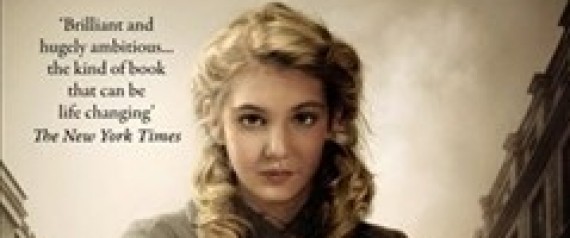

Australian author Markus Zusak's The Book Thief holds the top spot for the third consecutive year. The Book Thief has sold 8 million copies and was adapted into a film starring Geoffrey Rush.
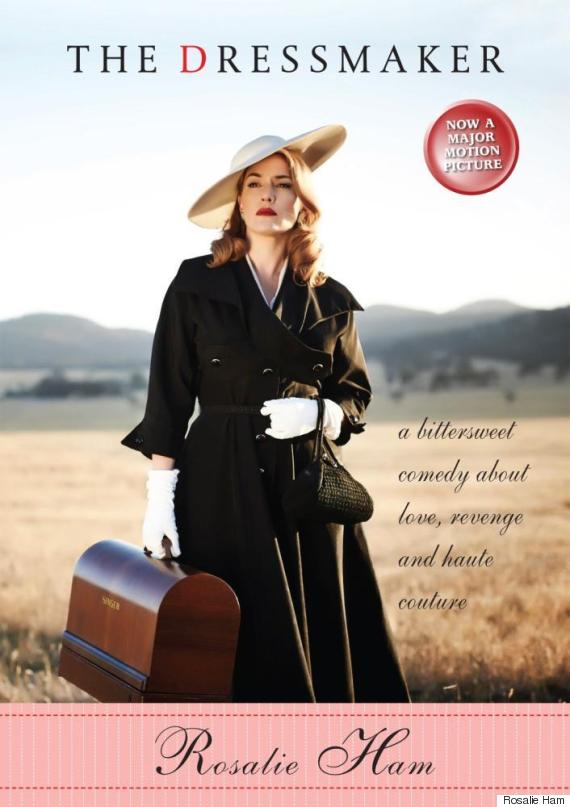
Twenty per cent of the books on the Top 101 are Australian, including The Dressmaker at No 12.
Penned by Rosalie Ham 15 years ago, the book surged in popularity following the success of last year's film adaptation, starring Kate Winslet and Liam Hemsworth.

Author Aleesah Darlison told The Huffington Post Australia the average reader is more likely to purchase a book that they can also watch as a movie.
“They see it as validating that it must be a good read if it has been made into a film. Also, people like to compare to see if the movie is as good as the book, and vice versa. It’s natural to want to compare the book with the movie and see if the movie sticks to the truth of the original story," Darlison said.
“Personally, I like to read the book first. There is definitely that visual impact that a movie can have, particularly with special effects. But some people have brilliant imaginations where they can bring the book to life in their own minds and a movie can take away from that because, if you see the movie first, you are visualising the movie actors in your head and not what you might visualise the characters to look like. When I read Twilight, I didn’t want to see the film because then my head will be filled with Taylor Lautner! I wanted to see in my own mind what the characters would look like."
For any writer, having your book turned into a film is a ‘Holy Grail’ because the writer gets to access a whole other audience made up of people that don’t ordinarily read books. Author Katerina Cosgrove told HuffPost Australia most people who buy books that are ‘film-tie ins’ have seen the movie and want to read the book to get more details about the story.
“The readers who only buy a book after seeing the movie are not readers in the traditional sense. Those people probably don’t read voraciously. The people who make books that are film tie-ins best sellers are people who don’t ordinarily read fiction, they are just interested in stories, whether they are visual or written. Everyone is interested in stories but for a lot of people books are not accessible to them. Many people say, ‘I’m not a reader’ and then will only read a book if there is a movie-version," Cosgrove said.
“What we need to remember is movies and books are completely different art forms, not everybody will want to indulge in both."
Adult titles make up 65 per cent of the Top 101 list, with children's/young adult making up the remaining 35 percent. Harry Potter and the Philosopher’s Stone is the highest children’s book on the list at no. 6 (up one place from last year).
Fans of the series are eagerly awaiting the release of Harry Potter and the Cursed Child on July 31st. Dymocks expects the book, which is a script, to break sales records not only with children but also with adult readers keen for another peek into the lives of Harry, Ron and Hermione.
For the first time, the list features a cook book (Jamie Oliver’s Everyday Superfood) and a colouring book (The Enchanted Forest by Johanna Basford.)
Thursday, 31 March 2016
12 Books to Ease Your Downton Abbey Withdrawal
12 books to ease your Downton Abbey withdrawal

Posted March 9 2016 — 7:32 AM EST
Now that Downton Abbey has come to an end, fans are left without their beloved Crawleys, servants, and stories of deceit and loyalty. Have no fear, though: Here are 12 books with similar themes, characters, and twists to ease your withdrawal.
This nonfiction memoir is the true story of one woman’s life in service to the great houses of England. As a kitchen maid, Powell saw firsthand the raucous vagaries of the aristocracy and the tragedies of the underclass, and reports them both with empathetic detail.
One of the few memoirs that can give readers an intimate and page-turning peek into the scandalous lives of the fabulously wealthy in the late 1800s and early 1900s, Eric Horne’s recounting of his decades as a butler for British aristocracy provides secrets that are all the more scandalous because they are true.
Dubbed E.M. Forster’s most optimistic work, A Room with a View follows Lucy, a young girl growing up in early twentieth century England and Italy, as she is forced by a strict society to refuse herself of the true love of the lower class George in favor of the materialistic and rude Cecil. As Lucy struggles with what to do with her life, the reader explores in-depth how society functioned in Edwardian England.
One of the primary writers of the original Upstairs, Downstairs series also wrote a trilogy of novels about the travails of an English household staring down the barrel of the twentieth century. Sound familiar? The first book in the series kicks off with the arrival of a beautiful Chicago heiress, who might just change the Dilberne estate’s fortunes.
Romance and scandal in high society make up the bulk of Nancy Mitford’s Love in a Cold Climate, in which beautiful and wealthy young debutante Polly is bored by her numerous suitors much to her hoity toity mother’s annoyance. The novel follows the hidden drama that courses like blood through the veins of the aristocratic Montdore manor in early twentieth century London.
This novel retains Downton Abbey’s epic scope, zooming in on aristocratic heiress Celia Lytton and the ways her headstrong decisions affect the lives of those around her.

Set in London around the World War II era, Howard’s series goes inside the Cazalet family, exploring the inner thoughts of the three generations of Cazalets as well as their friends and servants. While the stories are deeply personal, they also investigate the effects WWII had on families from numerous perspectives. The book series was adapted into BBC mini-series The Cazalets in 2001.
This retelling of Jane Austen’s Pride and Prejudice shows the events of the Bennet household from the servants’ perspective. Austen neglected the servants in her stories, but Jo Baker amends that here, proving that their stories are just as dramatic and witty as those of the rich dilettantes.
Downton fans wanting for more of a lesson in the Mrs. Patmores and Mrs. Hugheses of the world should look no further than this history of the help, ranging from the eighteenth century to the modern times. The books also offers detailed explanations for each position, just in case you don’t actually remember what a footman is supposed to do but are afraid to ask.
As 1989’s Man Booker Prize for fiction winner, Ishiguro’s third novel follows a butler’s (Stevens) unresolved relationship with a former housekeeper (Miss Kenton). Told through diary entries, the beloved book flips between themes of dignity, desire, and loyalty in pre-World War II-era Britain.
Galsworthy epic spanned five volumes — three novels and two interludes — and examined the life, loves, and obsessions of Soames Forsyte, a moneyed man whose financial success never manages to satisfy him. The story is told across years and generations, as Galsworthy explores what money actually means to those who have lots of it. Plus, since the works are old enough to exist in the public domain, they’re free to read.
In Edith Warton’s 1913 novel, midwesterner Undine Spragg is in over her head when she uproots her family to move to New York. She marries a has been socialite Ralph Marvell and in hopes to raise her own social standing, devolves into high-ish society. Downton creator Julian Fellowes has cited the book as a major influence on him and the show, and traces of Undine show up in various characters in Yorkshire.
Below Stairs by Margaret Powell
Perfect for: Fans of Mrs. Hughes, Anna, and the maids of DowntonThis nonfiction memoir is the true story of one woman’s life in service to the great houses of England. As a kitchen maid, Powell saw firsthand the raucous vagaries of the aristocracy and the tragedies of the underclass, and reports them both with empathetic detail.
What the Butler Winked At by Eric Horne
Perfect for: Anyone who wishes Mr. Carson had a wild sideOne of the few memoirs that can give readers an intimate and page-turning peek into the scandalous lives of the fabulously wealthy in the late 1800s and early 1900s, Eric Horne’s recounting of his decades as a butler for British aristocracy provides secrets that are all the more scandalous because they are true.
A Room with a View by E.M. Forster
Perfect for: Downton fans who will miss its complex love storiesDubbed E.M. Forster’s most optimistic work, A Room with a View follows Lucy, a young girl growing up in early twentieth century England and Italy, as she is forced by a strict society to refuse herself of the true love of the lower class George in favor of the materialistic and rude Cecil. As Lucy struggles with what to do with her life, the reader explores in-depth how society functioned in Edwardian England.
The Habits of the House by Fay Weldon
Perfect for: Fans of Downton Abbey’s interplay between personal dramas and world-shaking historical backgroundOne of the primary writers of the original Upstairs, Downstairs series also wrote a trilogy of novels about the travails of an English household staring down the barrel of the twentieth century. Sound familiar? The first book in the series kicks off with the arrival of a beautiful Chicago heiress, who might just change the Dilberne estate’s fortunes.
Love in a Cold Climate by Nancy Mitford
Perfect for: Those who want more social-climbing marriage storiesRomance and scandal in high society make up the bulk of Nancy Mitford’s Love in a Cold Climate, in which beautiful and wealthy young debutante Polly is bored by her numerous suitors much to her hoity toity mother’s annoyance. The novel follows the hidden drama that courses like blood through the veins of the aristocratic Montdore manor in early twentieth century London.
No Angel by Penny Vincenzi
Perfect for: Lady Edith and Lady Mary devoteesThis novel retains Downton Abbey’s epic scope, zooming in on aristocratic heiress Celia Lytton and the ways her headstrong decisions affect the lives of those around her.
The Cazalet Chronicles by Elizabeth Jane Howard
Perfect for: True history buffsSet in London around the World War II era, Howard’s series goes inside the Cazalet family, exploring the inner thoughts of the three generations of Cazalets as well as their friends and servants. While the stories are deeply personal, they also investigate the effects WWII had on families from numerous perspectives. The book series was adapted into BBC mini-series The Cazalets in 2001.
Longbourne by Jo Baker
Perfect for: Viewers who knew that all the real action happened downstairsThis retelling of Jane Austen’s Pride and Prejudice shows the events of the Bennet household from the servants’ perspective. Austen neglected the servants in her stories, but Jo Baker amends that here, proving that their stories are just as dramatic and witty as those of the rich dilettantes.
Servants by Lucy Lethbridge
Perfect for: Those who prefer downstairs to upDownton fans wanting for more of a lesson in the Mrs. Patmores and Mrs. Hugheses of the world should look no further than this history of the help, ranging from the eighteenth century to the modern times. The books also offers detailed explanations for each position, just in case you don’t actually remember what a footman is supposed to do but are afraid to ask.
The Remains of the Day by Kazuo Ishiguro
Perfect for: Those who ship Carson and Mrs. HughesAs 1989’s Man Booker Prize for fiction winner, Ishiguro’s third novel follows a butler’s (Stevens) unresolved relationship with a former housekeeper (Miss Kenton). Told through diary entries, the beloved book flips between themes of dignity, desire, and loyalty in pre-World War II-era Britain.
The Forsyte Saga by John Galsworthy
Perfect for: Fans who don’t need a likable protagonistGalsworthy epic spanned five volumes — three novels and two interludes — and examined the life, loves, and obsessions of Soames Forsyte, a moneyed man whose financial success never manages to satisfy him. The story is told across years and generations, as Galsworthy explores what money actually means to those who have lots of it. Plus, since the works are old enough to exist in the public domain, they’re free to read.
The Custom of the Country by Edith Wharton
Perfect for: Those who love to hate Lady Mary CrawleyIn Edith Warton’s 1913 novel, midwesterner Undine Spragg is in over her head when she uproots her family to move to New York. She marries a has been socialite Ralph Marvell and in hopes to raise her own social standing, devolves into high-ish society. Downton creator Julian Fellowes has cited the book as a major influence on him and the show, and traces of Undine show up in various characters in Yorkshire.
Tuesday, 15 March 2016
British Telly: 10 Downton Abbey Filming Locations You Can Visit on Your Next Trip

Downton Abbey has become something of a cultural phenomenon on both sides of the pond since it first aired in 2010. Beginning with the sinking of the Titanic, the programme has followed the Crawley family and their servants through the latter 1910s, World War I, and into the mid-20s. Though it came to an end with this past December’s Christmas special, Julian Fellowes’s period piece ultimately ran for six series and a total of fifty-two episodes. If you’re a fan, you may be wondering where some of these fantastic places are and how you can visit them. You’ll be happy to know that many are easy to reach and love having fans come to call.
Inveraray Castle

Inveraray Castle next to Loch Frye in Argyll, Scotland will be instantly recognisable to fans as Duneagle Castle, the home to Crawley relatives Hugh, Susan, and Rose MacClare. Duneagle was used as a location multiple times since the 2012 Christmas Special, but was eventually sold by the MacClares when they lost their fortune. In real life, a castle had existed on the estate since the 1400s, though the current manor home was constructed after a fire in 1877. Inveraray doesn’t seem to do much to take advantage of its Downton connection, but still offers tours, a tearoom, gardens, and regular events that will make a visit enjoyable for anyone.
Basildon Park

Far from the streets of London, Basildon Park is a stately manor home in Berkshire where the interior has doubled for that of Grantham House, the city residence for the Crawleys during the summer season every year. Built between 1776 and 1783, the Georgian mansion has been in the care of the National Trust since 1978. As such, it’s open to tours and regularly hosts events including art exhibits, wildlife walks, and more. Basildon is more than happy to play up it use as a filming location for Downton Abbey and larger parties can opt for a filming talk or tour of the house.
Alnwick Castle

Doubling as Brancaster Castle and the home of the Marquess of Hexham, Alnwick Castle first appears in the 2014 Christmas Special as the setting for a grousing party by Lord Sindersby, who is renting the estate. Dowager Countess actress Maggie Smith was familiar with the location well before its appearance in Downton, as it was also used for filming parts of Hogwarts Castle in the first two Harry Potter films. In real life, it’s the ancestral seat of the Duke of Northumberland and his family still resides there, though they have transformed significant parts of the castle and grounds into a great tourist attraction. It’s been a filming location on a dozen times over for different productions, but don’t expect as much Downton as it prefers to play up its Potter affiliation.
Lancaster House

If you want to visit Buckingham Palace, you may have a difficult time getting inside, but Lancaster House in the West End of London was used for the interiors and Rose’s presentation at court during the 2013 Christmas Special. It’s not the only time Lancaster House doubled for Buckingham Palace, as it also did so for the film The Young Victoria. Since the house is owned and maintained by the British Government, specifically the Foreign and Commonwealth Office, it plays host to many important events and government functions. As such, it’s not often open to the public, but you can catch the occasional open day and take advantage of the chance to visit.
The Criterion

The Criterion Restaurant in London is one of those rare venues in Downton Abbey that actually gets to play itself, appearing as a dinner location for Edith Crawley and Michael Gregson. The 1874 neo-Byzantine restaurant is Grade II listed and is lavishly decorated on the inside. Despite a brief financial hiccup in 2015 after a rent hike forced it into administration, it continues to operate. You might want to set aside some money to eat there, however, as it can get a little pricey.
Lincoln Castle

One of the more interesting subplots of the programme have involved John and Anna Bates, especially during the time in which he was falsely accused of murder and sent to York Prison. In reality, the prison scenes were all done at Lincoln Castle, a fortress built by William the Conqueror in the 11th Century and has served as a jail and law court in more modern times, allowing its cells to easily double for John Bates’ own accommodations. Lincolnshire County Council now operates the castle as a museum that offers tours of the medieval castle, the Victorian prison, and its special Magna Carta exhibit, where the famous legal document has housed a copy since 1215. Tickets cover all three exhibits.
West Wycombe House

Sister to Lord Grantham and widow of Lord Marmaduke Painswick, Lady Rosamund Painswick resided at the real-life West Wycombe Park when not in London. It was used for filming during the fifth series, though it’s no stranger to use as a location, having appeared in The Importance of Being Earnest, 2011’s W.E., and other productions. As with Alnwick, it was home of real nobles, the Dashwood family, who held the title of Baronet of Great Britain. Run by the National Trust since 1943, it is both a museum and an actual home for the current Baronet, Sir Edward Dashwood. The house is only open for a few months every year, so make sure to plan your trip accordingly.
Trench Farm, Akenham

If you want to experience the trenches of World War I in a much more subdued manner than Matthew Crawley and other members of Downton Abbey did, you can visit Trench Farm in Akenham where those scenes were filmed. Recreating the Battle of Somme for the programme, Trench Farm has accurate reproductions of both the English and German sides during the war and is often bused by film and television productions. You’ll need to make an appointment to visit (in case some filming is going on), but the location boasts a large car park, toilets, a camp site, and some period buildings.
Bampton

If you want to go walking through the Yorkshire village of Downton, you’ll need to visit the real village of Bampton twenty miles west of Oxford. The streets and buildings within Bampton have been used repeatedly for filming while the series was ongoing. One of the most prominent locations is St. Mary the Virgin parish church, which was a filming location both externally as well as internally. There are also a number of tours out of London and Bath that will treat you to a Downton view of Bampton.
Highclere Castle

The number one stop for any Downton Abbey fan, Highclere Castle is the stand-in for the famous home. It is the county seat for the Earl of Carnarvon and home to the Herbert family, who use part of the mansion as their residence while utilising the rest for filming, galleries, and a museum. In addition to its Downton heritage, Highclere also has an impressive collection of Egyptian artefacts belonging to the 5th Earl, George Herbert, from his expedition of King Tut’s tomb with Howard Carter. Do be sure to check the castle’s website for opening times as it does tend to close during the winter months, though it also has an app that will let you explore the home from afar.
Feb. 22, 2016 John Rabon Anglotopia
Tuesday, 8 March 2016
15 Books With Completely Different Movie Endings

Image credit:
Universal Studios
Like us on Facebook
So you read the book before you saw the movie. Congrats! Unfortunately—as these examples prove—that doesn't always make you an expert on what, exactly, is going to unfold on the big screen. (It should go without saying, but this article contains spoilers—lots of them. You've been warned!)
1. Jurassic Park
Jurassic Park, one of the most popular summer blockbusters of all time, doesn't completely line up with the events described in Michael Crichton's best-selling novel of the same name. At the end of the book, the Costa Rican military comes to the rescue by bombing Site A on Isla Nublar. But director Steven Spielberg felt like changing it up. Instead of a military intervention, Spielberg decided to have the T. Rex return to save the protagonists from a Velociraptor attack. "I think the star of this movie is the T. Rex," Spielberg explained at the time. "The audience will hate me if the T. Rex doesn't come back for one more heroic appearance."
The book and movie's body counts vary, too. By the end of the novel, John Hammond has died, and it is implied that Ian Malcolm has as well. Both survive in the movie. On the other hand, the park's game warden, Robert Muldoon, and IgGen's attorney, Donald Gennaro, perish in the big screen adaptation, but live on in the book.
2. Planet of the Apes
Planet of the Apes features one of the most iconic twist endings in movie history: Astronaut George Taylor (played by Charlton Heston) discovers he has been marooned on a post-apocalyptic Earth the entire time. But in La Planète des Singes, the French novel it is based on, the main character—journalist Ulysse Merou—lands on a different planet during the course of his travels, one inhabited by self-aware apes, sentient monkeys, and tribes of dimwitted humans. When Ulysse finally makes it back to Earth, he is shocked to learn that it is now 700 years in the future, and that a similar hierarchy has emerged at home.
Twilight Zone creator Rod Serling, who co-wrote the film's screenplay, was the one who ultimately decided to make the planet of the apes Earth in the distant future.
3. A Clockwork Orange
Stanley Kubrick based his screenplay on the shortened American version of the British novel by Anthony Burgess. This telling omitted the final chapter of the book, focused on Alex after he is rehabilitated. Though he grows out of his murderous tendencies in Burgess' text, in Kubrick's interpretation, Alex remains as psychotic as ever. Kubrick didn't like the tale's original ending; he felt it was entirely too optimistic given the story's tone and themes. "I think whatever Burgess had to say about the story was said in the book,” Kubrick said. “But I did invent a few useful narrative ideas and reshape some of the scenes."
Burgess was not a fan of the final product. "The book I am best known for, or only known for, is a novel I am prepared to repudiate: written a quarter of a century ago," Burgess later recalled. "It became known as the raw material for a film which seemed to glorify sex and violence. The film made it easy for readers of the book to misunderstand what it was about, and the misunderstanding will pursue me until I die."
4. Fight Club
The film version of Fight Club remains faithful to author Chuck Palahniuk's original plot—until the very end, that is. The movie version wraps up as the narrator, standing beside Marla, watches a series of explosions caused by his now-absent alter ego, Tyler Durden. At the end of the book, however, the narrator wakes up in recovery from his gunshot wound. He thinks he's in heaven, but Palahniuk makes it clear that he's actually in a mental institution. Several hospital attendants ask him when he's going to start Project Mayhem again, inferring that Tyler Durden is still very much a part of him.
Director David Fincher explained his choice by arguing that the book was too devoted to the narrator's alter ego: "[I] wanted people to love Tyler (Durden), but I also wanted them to be OK with his vanquishing."
5. The Scarlet Letter
Nathaniel Hawthorne’s novel The Scarlet Letter is an exploration of guilt, punishment, and mob mentality in 17th-century New England. At the end of the classic tale, the townspeople persecuting Prynne learn that the father of her baby is Reverend Dimmesdale, who eventually dies from immense guilt.
The 1995 film version of The Scarlet Letter opted instead for a happy Hollywood ending (read: no one dies). Instead, Reverend Dimmesdale and Hester Prynne leave their town in order to build a new life together.
6. Breakfast at Tiffany’s
Truman Capote's beloved novella was also given a simplified and sanitized Hollywood ending. In the book, Holly Golightly loses her cat and abandons New York for Argentina—it's unclear where the free spirit will end up next. The movie, on the other hand, ends with Audrey Hepburn's Holly reuniting with Cat and sharing a passionate kiss with neighbor Paul. (There's no romance between them in Capote's version.)
Capote wasn't a fan of the movie based on his work, nor of the casting of Audrey Hepburn. "I had lots of offers for that book, from practically everybody," Capote said in an interview. "And I sold it to this group at Paramount because they promised things, they made a list of everything, and they didn't keep a single one."
7. My Sister's Keeper
Jodi Picoult's My Sister's Keeper tells the story of a young leukemia patient named Kate, whose parents conceive another daughter, Anna, in order to have an organ donor for their firstborn. When she turns 13, Anna is asked to donate one of her kidneys to her dying sister. She refuses and sues her parents for medical emancipation.
In the book, Anna gets into a terrible car accident, and her kidneys are posthumously harvested for Kate, who survives. But for the 2009 adaptation, director Nick Cassevetes chose to reverse the sisters' fates. Kate ends up succumbing to her illness after she refuses to accept her sister's organs. Cassevetes believed his movie's ending was more accurate after he visited pediatric hospitals and talked to terminally ill patients.
"Going and visiting people in the hospital, this story repeated over and over and over again," Cassevetes told About.com. "In reality, none of these stories ended like the book did."
8. The Mist
Stephen King's The Mist ends on a vague note—a few survivors head towards the source of a mysterious radio transmission as the titular mist creeps around them. But director Frank Darabont decided to give the film a more definitive—and more gut-wrenching—conclusion. David, played by Thomas Jane, comes to realize that the group's survival efforts are futile. To prevent any further suffering, he kills the remaining survivors, including his son, just before the military shows up to inform him that the situation is now under control.
"How primitive do people get?" Darabont said of his new ending. "It's Lord of the Flies that happens to have some cool monsters in it." King, for his part, gave the new ending two thumbs-up: "The ending is such a jolt—wham! It's frightening. But people who go to see a horror movie don't necessarily want to be sent out with a Pollyanna ending."
9. The Lorax
At the end of Dr. Seuss' The Lorax, the tale's Once-ler gives the boy the last-ever Truffula seed in the hopes that he'll be able to grow a new forest. But there's no room for ambiguity in the story's 2012 cartoon version: Before the credits roll, new Truffula Trees are flourishing and The Lorax has returned to the forest.
10. Red Alert
Dr. Strangelove or: How I Learned to Stop Worrying and Love the Bomb, based on Peter George's Red Alert, takes a comedic approach to the source material. Instead of narrowly avoiding a nuclear catastrophe at the zero hour (like the book does), Stanley Kubrick decided to blow up the world because of some petty bickering.
Originally, Kubrick planned to have everyone in the situation room get into a big pie fight. But "I decided it was farce and not consistent with the satiric tone of the rest of the film," he said.
11. Forrest Gump
There are some pretty major differences between Forrest Gump's book and film versions. Though the movie ends with Jenny's death and shows Forrest raising their child alone, the book wraps up with Forrest starting up his own shrimp business, in memory of his college friend Bubba. (Another key difference: in Winston Groom's book, Jenny survives, but marries another man and has his child.)
"[Screenwriter] Eric Roth departed substantially from the book,” Zemeckis told the Chicago Tribune. “We flipped the two elements of the book, making the love story primary and the fantastic adventures secondary. Also, the book was cynical and colder than the movie. In the movie, Gump is a completely decent character, always true to his word. He has no agenda and no opinion about anything except Jenny, his mother, and God."
Groom believed that the movie "took some of the rough edges off" his beloved character. In fact, he was so unhappy with the film that he started the book's sequel, Gump and Co., with Forrest telling readers, "Don't never let nobody make a movie of your life's story."
12. Who Censored Roger Rabbit?
Who Censored Roger Rabbit?, the inspiration for Who Framed Roger Rabbit?, is a surprisingly dark murder mystery. In the novel, Roger hires Detective Eddie Valiant to figure out why Rocco DeGreasy, the man who has the cartoon rabbit under contract, hasn't given him his own comic strip. During Valiant's investigation, Roger Rabbit is murdered and his wife Jessica is framed. Valiant spends the rest of the story trying to figure out who killed Roger. (The book ends with the revelation that a mysterious genie is the culprit.)
Although there's still a murder at the center of the 1988 movie version—this time, Toontown owner Marvin Acme is the victim—Disney and Touchstone Pictures gave the entire story an overhaul when the company acquired the film rights from author Gary K. Wolf. The studios hoped to make a family-friendly blockbuster in order to rejuvenate their flagging animation department, and saw Who Censored Roger Rabbit? as a means to that end.13. I Am Legend
In 2007, Will Smith starred in author Richard Matheson's I Am Legend as Dr. Robert Neville, the sole survivor of a worldwide plague that turns humans into infected, vampire-like creatures.
The book ends with Dr. Neville, who spends his days slaying the infected to protect himself, learning that he's considered a monster to the creatures who are now the dominant race on the planet. He's imprisoned and later executed for his crimes. In the movie, however, Neville solidifies his hero status by handing off a cure for the virus ravaging the planet to a healthy woman and boy. An alternate ending that showed more interaction between Neville and the creatures was shot, but the filmmakers opted to go with an ending in which Will Smith sacrifices himself for the sake of the human race.
14. First Blood
The first Rambo movie is based on the novel First Blood by author David Morrell. The book and the movie both tell the story of a troubled Vietnam War vet, but the book ends with his death after a violent showdown with Chief Teasle. In the movie, Rambo and Teasle survive, and Rambo turns himself into the authorities.
The reason for the change: Once again, early test audiences didn't approve of the original ending, and wanted to see Rambo live to fight another day.
15. The Body Snatchers
The 1956 black-and-white classic, based on Jack Finney's The Body Snatchers, ends with protagonist Miles ranting and raving ("You're next!") along a busy highway of pod people and non-believers. But in the book, the titular body snatchers flee Earth after Miles discovers where their pods are grown and begins to set them on fire.
Though director Don Siegel and screenwriter Daniel Mainwaring were happy with their unsettling ending, the movie studio demanded a more hopeful outcome. To keep the bosses happy, the filmmakers added in a brief epilogue, during which the audience learns that local police had alerted national authorities to the presence of the space invaders. Sniffed Siegel, "The film was nearly ruined by those in charge at Allied Artists, who added a preface and an ending that I don't like."
Subscribe to:
Posts (Atom)