Tuesday, 17 May 2016

Sarah Polley–directed Alias Grace set to film in Toronto

Quill and Quire May 17, 2016
Sarah-Polley-Directing
Sarah Polley
Actor and director Sarah Polley will begin shooting her long-planned adaption of Margaret Atwood’s 1996 novel, Alias Grace, in Toronto this August.
Polley originally announced the project as a big-screen motion picture in 2012, but in 2014 plans were revised to produced a six-hour television miniseries. Shooting will begin at Revival Studios on Aug. 15 and continue for three months. Casting details have not been announced.
This will not be Polley’s first CanLit adaptation – she received an Oscar nomination for her adapted screenplay of Alice Munro’s The Bear Came Over the Mountain, released in theatres in 2006 as Away From Her.
Atwood’s historical-fiction novel is based on the real-life 1843 Upper Canada murders of Thomas Kinnear and his housekeeper, Nancy Montgomery. The book won the Scotiabank Giller Prize and was shortlisted for the Man Booker Prize. Atwood wrote an earlier version of the story for CBC Television in 1974.

Tuesday, 10 May 2016

What's Next for the Cast of Downton Abbey?

Via PBS, May 9, 2016
Downton Abbey cast members
While we may never again see the Dowager launch a new zinger or Lady Mary raise a fresh eyebrow, we can look forward to seeing Downton's talented and hardworking cast for many years to come! Find out what's next for Downton Abbey's cast members, where you can see them, and how far their new roles are speculated to take them from their Downton Abbey characters!
Michelle Dockery
Michelle Dockery
If Lady Mary's Liverpool assignation were a regular and casual event, conducted between cons, thefts, and prison stints, she might be closer to Michelle Dockery's next character, Letty Dobesh, the protagonist of the upcoming TNT series Good Behavior. Letty is contemporary, she's American, and she's a train wreck…How un-Mary, how vulgar!
Departure from Downton: 100%
Joanne Froggatt
Joanne Froggatt
She stole the hearts of millions of viewers as Lady Mary's loving and resilient lady's maid, Anna. Next up, she stars as infamous Victorian serial killer Mary Ann Cotton, dispensing death from the spout of her teapot in the spine-tingling drama Dark Angel, coming to MASTERPIECE. From Downton's angel to angel of death, Froggatt does a 180 and shows us the breadth of her chops!
Departure from Downton: 100%
Hugh Bonneville
Hugh Bonneville
Hugh Bonneville may have left Downton behind, but he's not straying far from the aristocracy in his portrayal of Lord Mountbatten, the last Viceroy in India, in the upcoming feature film Viceroy's House. While the film is set in India in 1947, and Bonneville's character is an historical figure, it does involve both a house and a turbulent historical backdrop.
Departure from Downton: 50%
Maggie Smith
Maggie Smith
Maggie Smith follows up her iconic role as Downton Abbey's Dowager Countess in the biographical feature film, The Lady in the Van. She plays Mary Shepherd, a homeless woman who, for 15 years, parks her van in the driveway of real-life playwright Alan Bennett, returning to the character she portrayed on the London stage. While Violet and Mary couldn't be more opposite in both their residences or refinements, the characters share one quality: both are forces of nature!
Departure from Downton: 95%
Laura Carmichael
Laura Carmichael
Fans can look for Laura Carmichael in the feature film A United Kingdom, which is due to start shooting soon. Set in the 1940s, A United Kingdom is based on the true story of the future king (David Oyelowo) of Bechuanaland—formerly the British colony Botswana—and his marriage to a white British woman, Ruth Williams (Rosamund Pike). Carmichael will play her sister, Muriel. The sibling of a marrying sister? There's an Edith connection after all!
Departure from Downton: 70%
Allen Leech
Allen Leech
After feature film success in The Imitation Game, Leech is slated to head back to the big screen in Hunter's Prayer, an action-thriller based on a novel by Kevin Wignall, "For the Dogs." Leech goes from socialist to scoundrel as the boss of a hit man gone rogue.
Departure from Downton: 100%
Penelope Wilton
Penelope Wilton
Wilton makes the leap from the small screen to the big screen in Steven Spielberg's upcoming children's movie The BFG, based on the book by Roald Dahl and starring MASTERPIECE alum Mark Rylance (Wolf Hall). She'll play the Queen of England, which is certainly a change from the wonderfully class-blind Isobel Crawley!
Departure from Downton: 100%
Kevin Doyle
Kevin Doyle
From Downton Abbey's gentle philosopher-footman to present-day policeman, Kevin Doyle makes a 180 in portraying bad cop DS John Wadsworth in season two of Happy Valley (alongside The Paradise's Sarah Lancashire), on Netflix.
Departure from Downton: 100%
Elizabeth McGovern
Elizabeth McGovern
Next up for the actress behind Lady Cora takes Elizabeth McGovern back across the pond to 1977 America in Showing Roots, a feature film about opening a small-town beauty shop for black and white clients after the broadcast of the miniseries Roots.
Departure from Downton: 100%
Lily James
Lily James
Next up for Lily James, Downton's Lady Rose, is a WWII spy thriller, The Kaiser's Last Kiss, in which she plays the Jewish, Dutch love interest of a German soldier. After Pride and Prejudice and Zombies (Departure from Downton: 60%) and Cinderella (Departure from Downton: 70%), in Rose-like fashion, James once again plays forbidden love. But this time the stakes are much, much higher.
Departure from Downton: 90%
Samantha Bond in Home Fires
Samantha Bond
Downton's feisty Lady Rosamund, Samantha Bond, is slated to return as Frances Burden, the heart and soul of the Women's Institute, in Home Fires Season 2 on MASTERPIECE. Like Rosamund, Burden has a commanding—and sometimes divisive—presence. But she has a lot more work to do!
Departure from Downton: 75%
Brendan Coyle
Brendan Coyle
Brendan Coyle left Mr. Bates' cane and his conscience behind for his next television role—the actor behind Downton's longsuffering, loyal valet will play a vicious mob boss in the upcoming series Spotless (on the Esquire Network). A genuine baddie, instead of a falsely accused—what would Anna think?
Departure from Downton: 100%

Tuesday, 3 May 2016

Spring Time in Niagara

Don't we live in one of the most beautiful parts of Canada? I look forward to the flowering fruit trees in their spring glory.


Here is wonderful montage courtesy of Twenty Valley Tourism. Enjoy!


Tuesday, 26 April 2016

British Television Series New Seasons

Every week, I get a question from a patron on when the next series (season) of a British TV show is coming out. This week, I thought I would provide some updates.


Have you done the Broadchurch/Gracepoint marathon yet?  It was interesting to see the differences from the British to the American versions.


I have just finished watching the second series of Broadchurch. What a trial! Broadchurch will be filming its third and final series this summer. David Tennant and Olivia Colman will be coming back as the detectives. The vicar, the Latimers and the newspaper editor have been signed. Some new faces will be coming on board. Julie Hesmondhalgh (Hayley from Coronation Street) will be joining in a significant role. This series will focus on a new crime that has devastating consequences for the town. It will air in the UK in early 2017.


On the weekend, I was riveted by series 2 of The Fall.  Jamie Dornan is supremely creepy as Paul Spector. Filming has been completed on final series 3. The last 5 episodes will be shown in the UK late this year and possible on Netflix a couple of months after that.


The fourth and final season of Mr. Selfridge is currently being shown on PBS. Katherine Kelly (Becky from Coronation Street) will have more airtime this series.


Have you watched 'the Paradise', the poor man's version of Mr. Selfridge.  the BBC axed it in 2014 after two series because it couldn't compete with Mr. Selfridge.  If you haven't had a chance, check it out.


From time to time, I will update you on your favourite Brit television shows.  All series mentioned here are available from the Lincoln Public Library.


I'll be watching!


Thursday, 14 April 2016

Deconstructing Downton Abbey

Historian Margaret MacMillan on the global TV sensation       

Author: Jenny Hall        U of T News
Downton Abbey, the critically-acclaimed and immensely popular series depicting the lives of British aristocrats and their servants in the early 20th century, kicked off its third season this week.
Writer Jenny Hall spoke to historian Margaret MacMillan about the allure of the show—and its hits and misses. MacMillan, author of Paris 1919: Six Months that Changed the World, is the warden of St. Antony’s College at the University of Oxford and a professor of history at the University of Toronto.
Do you watch the show?
I quite enjoy it, though I haven’t become as hooked as some people. Bits of it were very good, but the melodrama increases as it often does in a series, as the writers struggle to find new and exciting things to keep the series interesting for viewers. Remember the mysterious Canadian who appeared wrapped in bandages?
What is your take as a historian? For many of us, TV and movies are the only way we engage with the past.
I think anything that gets people interested in the past is good. But if you really want to understand the past, you have to go to more than one source. A television series, no matter how well done, is not going to give you as full a picture of the past as reading memoirs, novels and historical studies. But anything that makes people aware that there were societies in the past that are different from our own, is good. It makes us think about our own society, too.
Unlike many other period pieces, Downton Abbey depicts the life of the servants as part of the story. Is it a faithful representation?
It’s a fairly favourable depiction of what it would have been like to be a servant in one of those great houses. You get a sense that the servants are all well housed and clothed and fed, which wouldn’t have been true. A lot of servants in those days worked extremely hard. They had virtually no holidays; they were up at 5 in the morning. You never really quite got a sense of the long hours.
There was a curious relationship between servants and the people they worked for. They lived in very intimate contact with each other in a way in which most of us would find very uncomfortable today. The servants would know pretty much everything that was going on.
Downton Abbey depicts big events—World War I, the flu epidemic—through the lives of the family and the servants. What are your thoughts about this?
I think it’s easier for people to understand the great movements in history if they can see them in very personal terms. You can read that 20 million died of the influenza epidemic, that’s almost too big to comprehend. Seeing what it meant to a family is different.
Is there anything you think the show does particularly well?
One of the things that comes out in the show is how much more acquainted people were with death. Babies often died and things that we would recover from easily today because of antibiotics often killed people then.
The other thing that’s interesting is that one of great strengths of the British landed classes generally was that they tended to have primogeniture—the eldest son inherited everything. On the show there’s this whole thing about Lady Mary and how she has no brothers. Even though she’s the oldest, she can’t inherit. Primogeniture kept the big estates together, whereas in Germany, Austria, Hungry and Russia, all sons inherited, so the big estates were broken up.
But what was also happening, and you get a sense of this in Downton Abbey, was that those who depended on owning agricultural land for their wealth were beginning to feel the pinch. That was partly because of places like Canada. When the prairies opened up in the 1870s and 1880s, suddenly there was a lot of cheap grain coming into Britain. A lot of the big families were finding it very hard to keep up their establishments, and estates were being sold. There’s one scene where Lady Mary is going to marry this ruthless businessman and they go to see a house they’re thinking of leasing. Lady Mary knows the house—it belonged to neighbours who had to give it up. In a way, the people you see in Downton Abbey are a doomed class.
One of the things that struck me is how the show depicted World War I and its relationship to the class system. You had characters of different classes fighting alongside each other.
There was still a class division within the British army—officers tended to be upper class or educated middle class. You did get officers and men living in very close quarters and that was often an eye opener, for the officers in particular. But Britain did still have an entrenched class system after the First World War. The war hastened the decline of the landed upper classes, though. It was expected that their sons would be officers. The death rate for young officers who were on the line was high—there were parts of the line where the life expectancy for a lieutenant was two weeks. In some families, virtually every male of military age got wiped out. There were horrendous losses in the other classes, too. But the aristocracy was a small class. They were losing their power anyway for a number of reasons, and fact that so many of them got killed hastened their decline.
The other big social change we see is women’s rights. Sybil, the youngest daughter, agitates for the vote for women.
Women were starting to have careers before the war, but upper class women were still expected to marry and not work. The first world war changed things because women started doing things that men traditionally did. You see them in Downton Abbey learning to drive cars. Other women worked the land, worked in factories. I think one of the reasons women got the vote after the war was recognition of the fact that they had been playing an important part in society through the war.
Are you surprised at how popular the show is? Why is it so compelling?
The students at my college in Oxford are fanatical watchers. They’re the last people I thought would be interested. Old people are supposed to be nostalgic, not young people!
It interests us because it’s such a different way of life, living in those beautiful country houses. They tend to show sunny afternoons and people having tea on the lawn. They don’t show the cold, miserable winter nights. And until the 20th century, if you got something like appendicitis or pneumonia, you could easily die. Think of all the things that we get that would have killed you in those days.

Tuesday, 5 April 2016

The Book Vs The Movie

Posted: Updated:     

THE BOOK THIEF

Print


Every book in the top ten of Dymocks’ annual top 101 Books for 2016 -- as voted by Australians -- has been made into a movie. (There is only one exception, The Rosie Project, which is currently being developed into a movie.) The Dymocks list is always an interesting way to look at people's reading habits and what stories people love to read. But this list seems to point to the fact that the average Australian reader mostly chooses to read books that are also movies.
Australian author Markus Zusak's The Book Thief holds the top spot for the third consecutive year. The Book Thief has sold 8 million copies and was adapted into a film starring Geoffrey Rush.
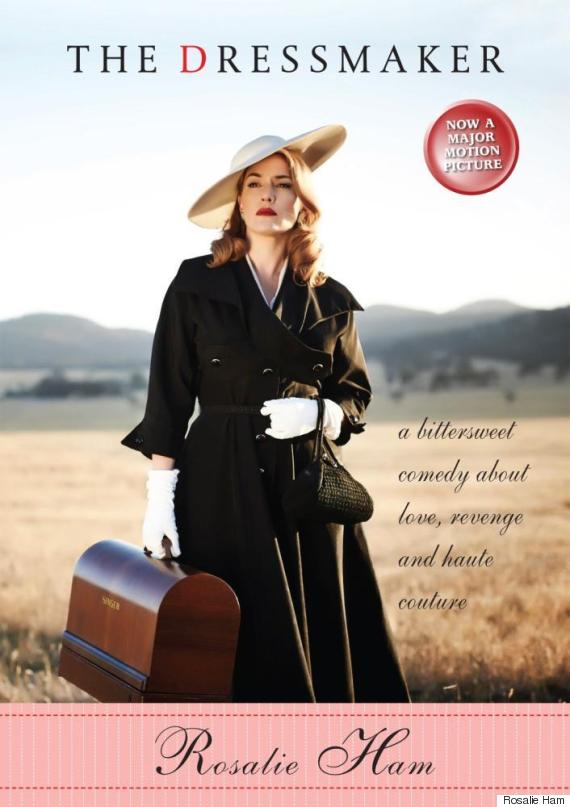
Twenty per cent of the books on the Top 101 are Australian, including The Dressmaker at No 12.
Penned by Rosalie Ham 15 years ago, the book surged in popularity following the success of last year's film adaptation, starring Kate Winslet and Liam Hemsworth.
the dressmaker
The Dressmaker is number 12 on the Dymocks Top 101 list, even though the book was published 15 years ago. Picture: Rosalie Ham

Author Aleesah Darlison told The Huffington Post Australia the average reader is more likely to purchase a book that they can also watch as a movie.
“They see it as validating that it must be a good read if it has been made into a film. Also, people like to compare to see if the movie is as good as the book, and vice versa. It’s natural to want to compare the book with the movie and see if the movie sticks to the truth of the original story," Darlison said.
“Personally, I like to read the book first. There is definitely that visual impact that a movie can have, particularly with special effects. But some people have brilliant imaginations where they can bring the book to life in their own minds and a movie can take away from that because, if you see the movie first, you are visualising the movie actors in your head and not what you might visualise the characters to look like. When I read Twilight, I didn’t want to see the film because then my head will be filled with Taylor Lautner! I wanted to see in my own mind what the characters would look like."
For any writer, having your book turned into a film is a ‘Holy Grail’ because the writer gets to access a whole other audience made up of people that don’t ordinarily read books. Author Katerina Cosgrove told HuffPost Australia most people who buy books that are ‘film-tie ins’ have seen the movie and want to read the book to get more details about the story.
“The readers who only buy a book after seeing the movie are not readers in the traditional sense. Those people probably don’t read voraciously. The people who make books that are film tie-ins best sellers are people who don’t ordinarily read fiction, they are just interested in stories, whether they are visual or written. Everyone is interested in stories but for a lot of people books are not accessible to them. Many people say, ‘I’m not a reader’ and then will only read a book if there is a movie-version," Cosgrove said.
“What we need to remember is movies and books are completely different art forms, not everybody will want to indulge in both."
Adult titles make up 65 per cent of the Top 101 list, with children's/young adult making up the remaining 35 percent. Harry Potter and the Philosopher’s Stone is the highest children’s book on the list at no. 6 (up one place from last year).
Fans of the series are eagerly awaiting the release of Harry Potter and the Cursed Child on July 31st. Dymocks expects the book, which is a script, to break sales records not only with children but also with adult readers keen for another peek into the lives of Harry, Ron and Hermione.
For the first time, the list features a cook book (Jamie Oliver’s Everyday Superfood) and a colouring book (The Enchanted Forest by Johanna Basford.)